




[Anadolu Ajansı] Can an alliance be priced? Trump's South Korea gambit and Asia's shifting future
글쓴이 :
최고관리자
등록일 :
2026-09-22 15:51:39
조회수 :
93회
글쓴이 : 최고관리자
등록일 : 2026-09-22 15:51:39
조회수 : 93회
| 링크 #1 https://www.aa.com.tr/en/opinion/can-an-alliance-be-priced-trumps-south-korea-gambit-and-asias-shifting-future/4047511 | 클릭수 46회 |
Can an alliance be priced? Trump's South Korea gambit and Asia's shifting future
Foundations, once repriced, are rarely restored to par. Trust denominated in dollars can always be devalued again. That is the lesson of this strange August on the Korean Peninsula—and it will outlast any summit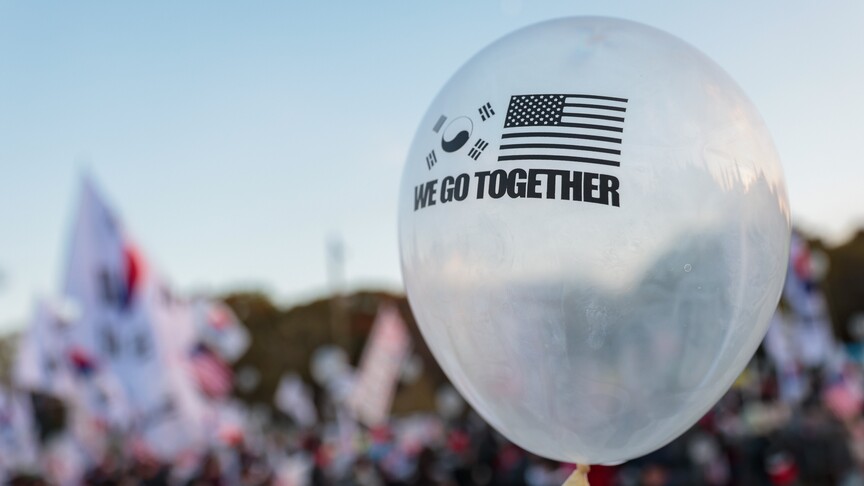
ISTANBUL
- Prof. Dr. Giwoong Jung is a faculty member in the Center for International Area Studies of Hankuk University of Foreign Studies and a Vice Head of the HK+ National Strategies Research Project Agency.
ISTANBUL (AA) - In August 2026, US President Donald Trump ordered the Pentagon to "substantially reduce" the Ulchi Freedom Shield exercises with South Korea (ROK)—halving an 11-day drill involving 18,000 troops without prior notice to Seoul—and offered two revealing justifications. He said the exercises were too expensive and that they sent "a signal that is totally inappropriate and hostile" to North Korea, which had been "unthreatening and respectful." Days later, he confirmed he hopes to meet Kim Jong Un this year, reportedly on the sidelines of the APEC summit in Shenzhen. Pyongyang's response was contemptuous: Kim Yo Jong said the gesture changed nothing, and a salvo of ballistic missiles followed. Washington paid with alliance credibility for a concession it did not receive.
When 'ironclad' gets a price tag
This episode captures the shifting foundations of the US alliance system in Asia. For seven decades, that system rested on a shared threat perception and an implicit bargain: allies hosted US power, and it treated their security as inseparable from its own. What is changing is not burden-sharing arithmetic—every US administration since Eisenhower has pressed allies to do more—but the nature of the commitment. Security guarantees are repriced as negotiable services, contingent on payment, trade concessions, and willingness to join US wars elsewhere: Seoul declined to help with the "denuclearization" of Iran, and the drills were accordingly cut. An alliance once called "ironclad" now carries a price tag.
How much of this is Trump, and how much is structural? Both. Structural pressures are real: relative US decline, the prioritization of China, crises from Ukraine to the Middle East, and a war-weary electorate. The 2026 National Defense Strategy document institutionalizes this logic, assigning the ROK "primary responsibility" for deterring the North while repositioning United States Forces Korea as a flexible regional asset aimed at China. But the form the adjustment takes—impulsive, personalized, publicly humiliating to allies—is distinctly Trump's. Recall that he suspended "war games" in 2018 after Singapore and, in his first term, demanded a fivefold increase in Seoul's alliance burden-sharing. What was then improvisation is now doctrine. A future president could restore the tone, but allies have learned that the underlying conditionality can return with any election. That knowledge is itself a structural change.
Disciplined calm and quiet hedging
Seoul and Tokyo are reading the moment with disciplined calm and quiet hedging. South Korean President Lee Jae Myung's office publicly welcomed the prospect of a Trump-Kim dialogue, even as his ministers conceded in parliament that they had not been informed in advance. Beneath the courtesy, Seoul is accelerating the transfer of wartime operational control, pursuing nuclear-powered submarines and a revised nuclear cooperation agreement granting enrichment and reprocessing rights—a "nuclear latency" functioning as insurance against abandonment. Support for nuclear armament is no longer confined to some policymakers; it now extends to the general public. Tokyo, having heard Trump call arms sales to Taiwan "a very good negotiating chip" with Xi Jinping, is pursuing its largest defense buildup in generations while deepening energy and supply-chain cooperation with Seoul. Both are paying unprecedented sums—$350 billion and $550 billion in pledged investments to the US, respectively—that officials privately describe as protection money: the price of keeping the US engaged while preparing for the day it may not be.
The strategic irony is that this undermines the US strategy toward China. Deterrence along the first island chain depends on allied bases, allied industrial capacity, and the credibility of US resolve. Deterrence is capability multiplied by will; Trump has made will the variable under negotiation. When exercises shrink to punish an ally, and tariffs batter the partners meant to anchor the anti-China coalition, Beijing needs only to wait. It has already weathered the Iran war's energy shock better than Japan or Korea.
A self-reliant Asia
Where, then, is Asia heading? Not, in my judgment, toward accommodation with Beijing—the memories of coercion are too fresh, and the hedging underway points the other way. The most probable destination is a more self-reliant Asia: wealthier, more heavily armed, more internally coordinated, and psychologically decoupled from Washington even where formally allied. That outcome is not necessarily tragic; a mature alliance of capable partners is what US strategists long claimed to want. The danger lies in the transition. If repricing proceeds erratically—exercises cut on a whim, summits dangled without consultation—the region may drift toward Beijing not by choice but by default. In its relationship with the US, the ROK has long been plagued by a cycle of alliance entrapment and the threat of abandonment. While Trump's threats are nothing new, from the ROK's perspective (and Japan's as well)—which, despite its absolute power, is treated as a relatively weak nation because of its geopolitical location—it might conclude that an unpredictable patron is worse than a demanding neighbor.
Foundations, once repriced, are rarely restored to par. Trust denominated in dollars can always be devalued again. That is the lesson of this strange August on the Korean Peninsula—and it will outlast any summit.
*Opinions expressed in this article are the author's own and do not necessarily reflect the editorial policy of Anadolu.
출처: AA(Anadolu Ajansı) Opinion / 링크: Can an alliance be priced? Trump's South Korea gambit and Asia's shifting futur
 관리자
관리자